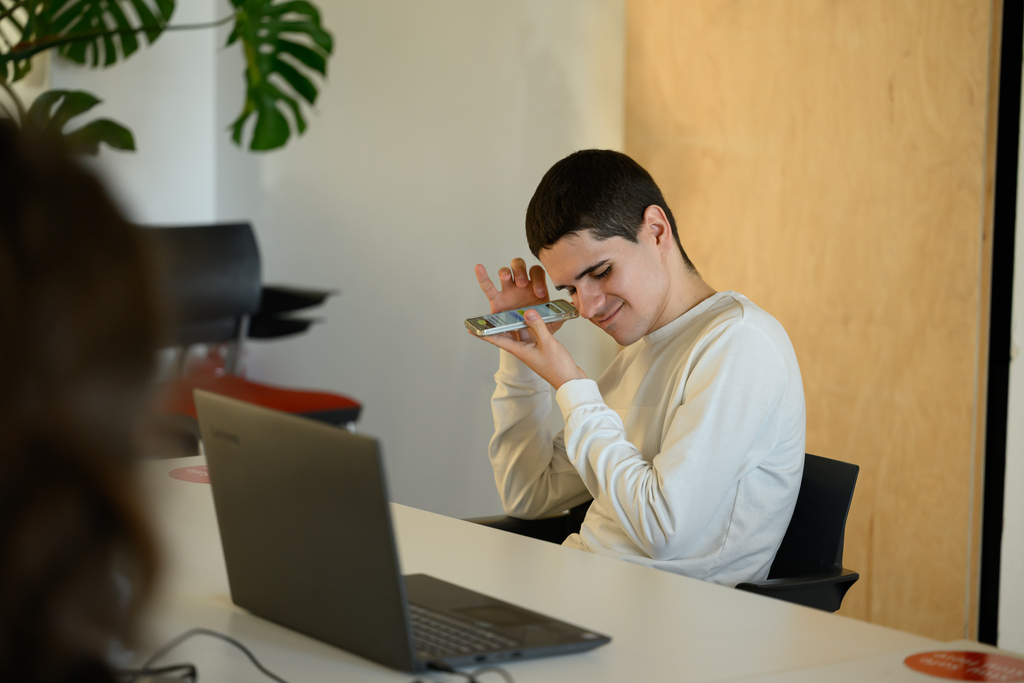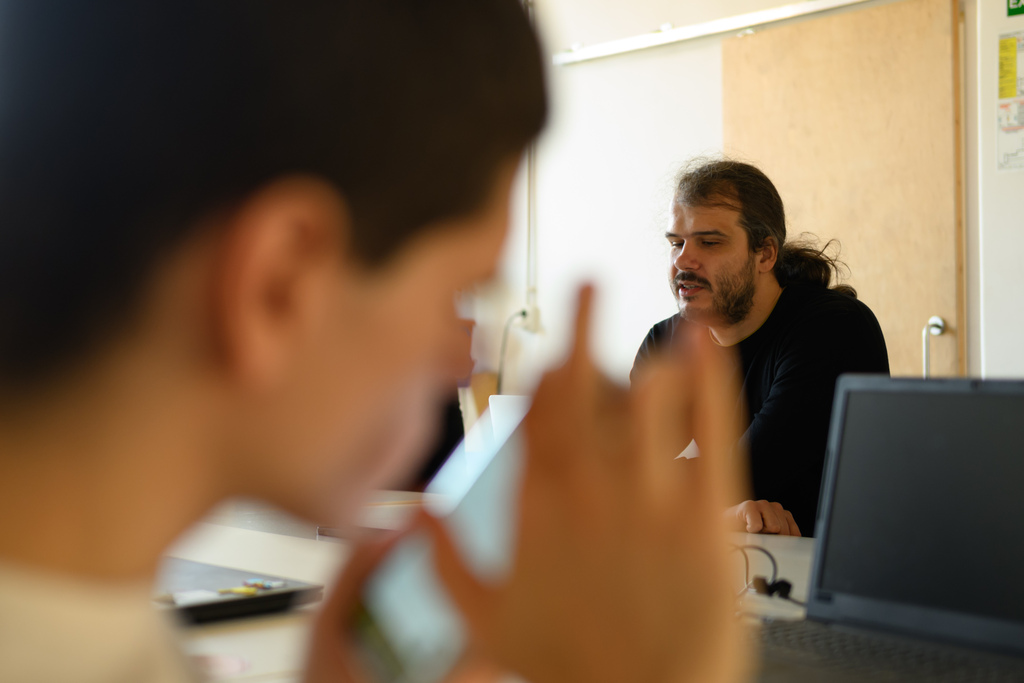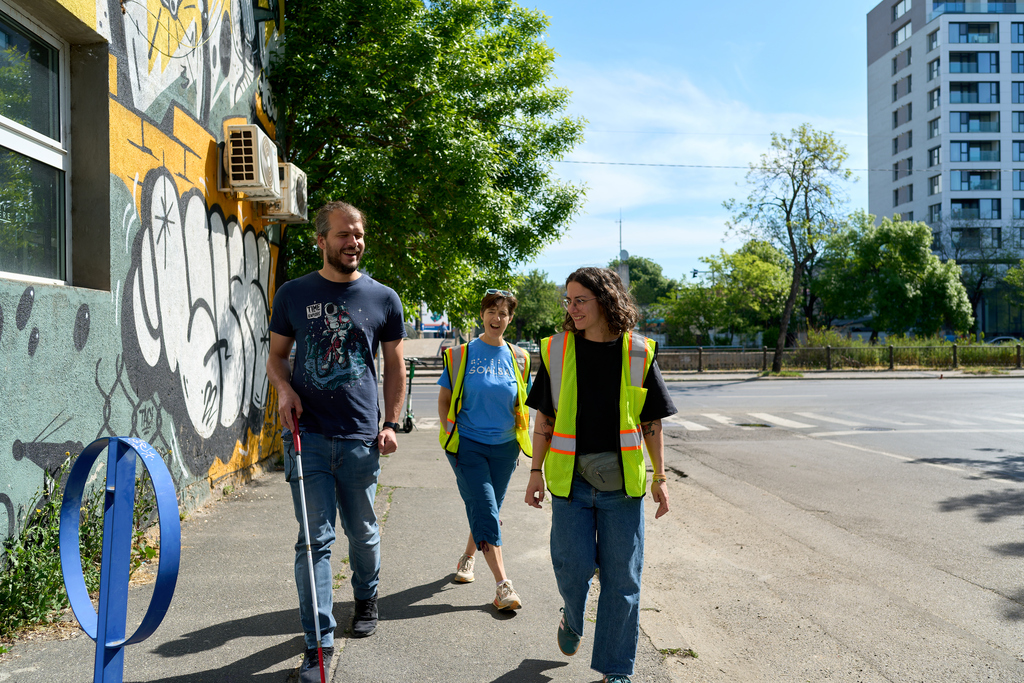
In Romania, nearly 1,000,000 people with disabilities still live without real access to education, decent jobs, and social participation. Biases, lack of accessibility, and poor policy decisions turn disability into a daily effect of the system, generating isolation, mistrust, precariousness, and enormous losses for the entire society. In this context, frustration, division, and discourses that turn us against each other are increasing.
In 2025, AMAIS continued to address the root cause of this systemic issue: perceptions and biases around disability. We worked along with people with disabilities to support their autonomy and confidence in their own abilities to become more present in society, and with people without disabilities to change perceptions and social reflexes, through experiences that make accessibility needs visible and pave the way for empathetic actions.
Thank you for being with us and supporting us through this process: through encouragement, direct involvement, sponsorships, and by staying close to AMAIS’s mission. Every gesture has made a difference.
For the next year, we wish you courage and optimism, and we hope to continue this journey together. Let’s make 2026 a year in which we build, step by step, a more accessible, inclusive, and equitable world.
In short, this is how we continued our mission this year:
CMU School
"I can't believe I walked alone. People said I couldn’t. I'll show them!"
N. is 54 years old person from Bucharest. Seven years ago, he lost his sight because of diabetes. To adapt to the changes he is going through and to maintain his independence, he has completed 5 mobility sessions and 12 assistive technology sessions with us.
In Romania, over 85,000 people with visual impairments live, over 5,000 in Bucharest. They often face social isolation and lack adequate support for independent living. Romanian society is not prepared to understand and respond to the real needs of people with disabilities.
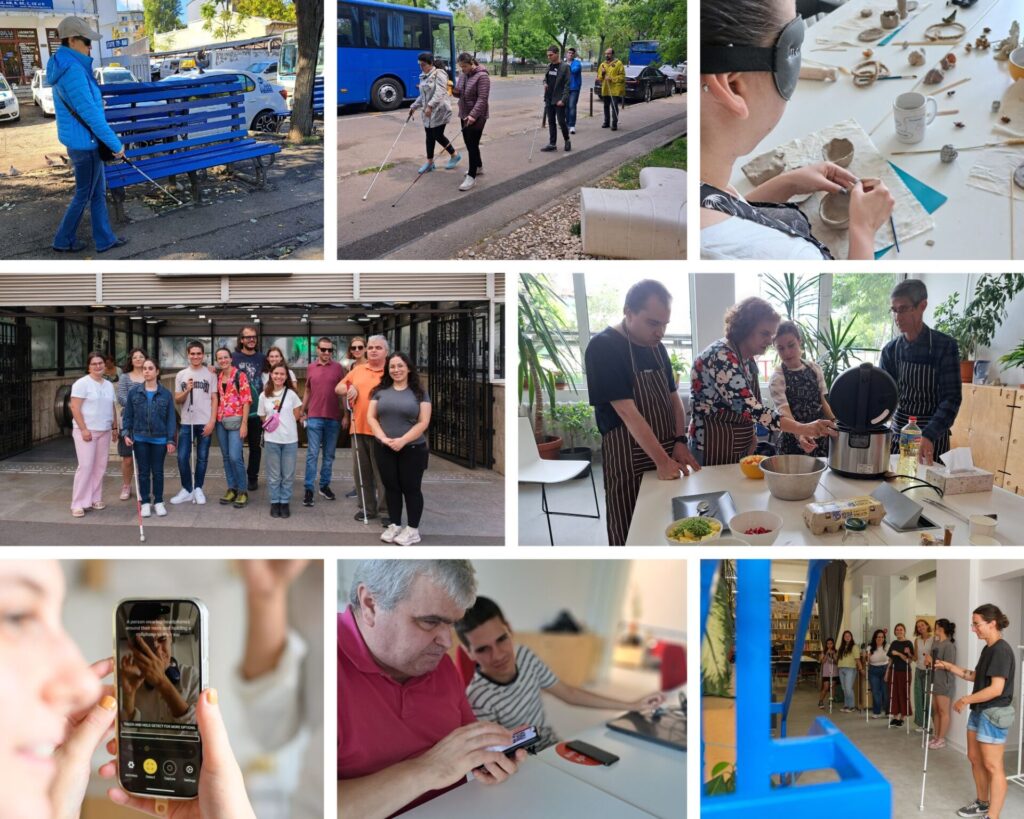
The CMU school offers a training program in mobility, technology, and independent life skills, dedicated to people with visual and associated disabilities. The project aims to increase social inclusion and reduce biases about disability, providing a safe learning environment adapted to the needs of each participant.
This generation has brought:
97 direct beneficiaries, of whom 48 are people with visual impairments;
approximately 41,500 indirect beneficiaries;
107 workshops and activities, including 98 mobility and technology sessions.
They have learned orientation techniques, traffic navigation, the use of public transport, and the use of assistive technology on phones and PCs. Many have acquired for the first time skills that allow them to get around the city independently, study effectively, communicate online or order an Uber.
In the absence of a national support system for people who lose their sight in adulthood, and to be able to support as many people from the country as possible, through the CMU School we have started to train a network of mobility and technology trainers. With the first 6 trainers trained this year, over 15,000 people in Bucharest, Cluj, Timișoara, Râmnicu Vâlcea, Baia Mare, Ploiești, and Sighetu Marmației now have access to specialized support in their own city.
You can read more about Training of Trainers here and the CMU School here: https://amais.ro/2025/
SeeYou
„SeeYou helped me both technically and socially. I met people who became my friends, with whom I developed a really nice relationship. They helped me overcome all kinds of barriers.”
– Vasi Capră, SeeYou beneficiary with visual impairment
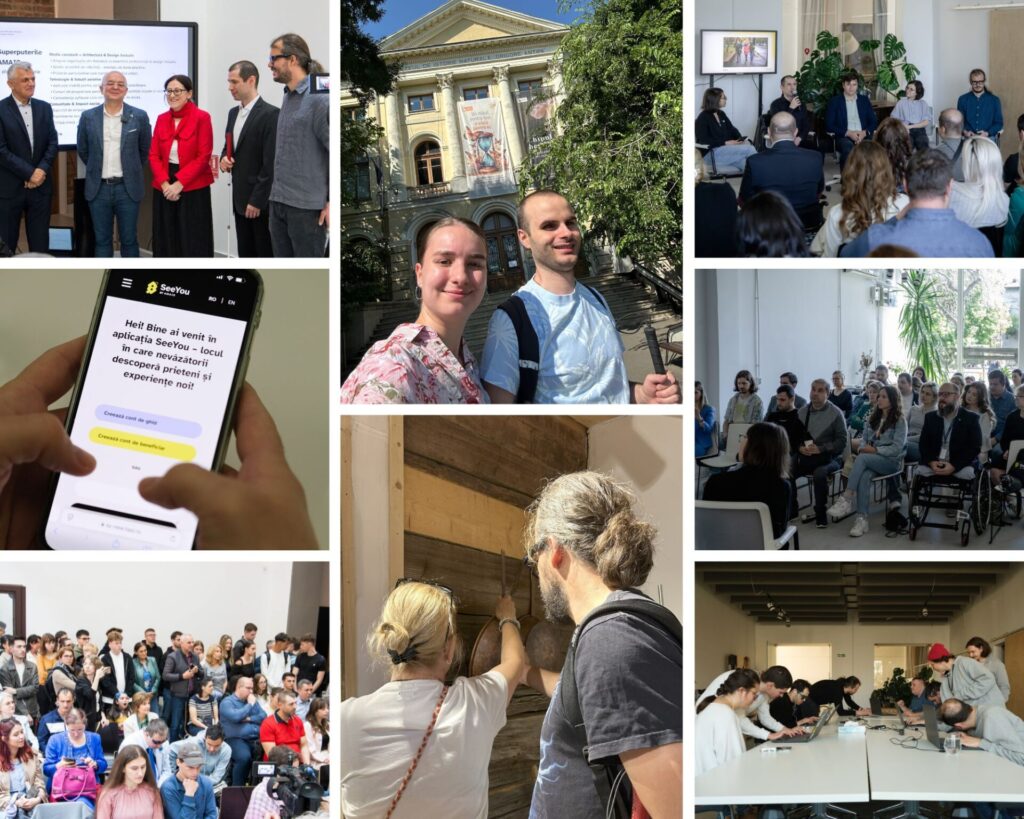
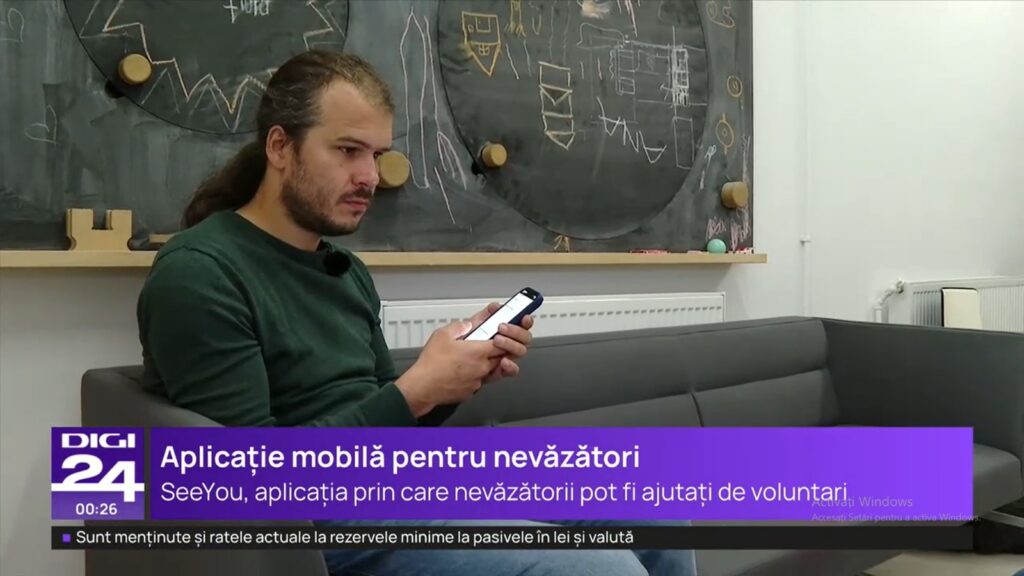
In Bucharest and Cluj-Napoca, approximately 8,000 people with visual impairments are invisible in public spaces because they cannot access them. SeeYou is the first platform in Romania that connects people with visual impairments with volunteer guides. Whether it’s shopping, going to the doctor or attending a concert, SeeYou helps people with disabilities be visible and present in the communities where they live.
In the past two years, SeeYou has brought together:
over 400 people with and without disabilities in Bucharest and Cluj;
over 200 moments in which people with visual impairments have participated in the community where they live.
Additionally, since May 2025, through funding from the Orange Foundation, SeeYou has expanded to Cluj and is also available as a mobile app, complementing the existing web platform, which remains active.
„The SeeYou app combines technology with humanity and gives an extra chance to people with visual impairments to handle real life.”
- Cluj's mayor, Emil Boc, in a video on Facebook
If you are not yet part of the SeeYou community, join and explore the city through a lens that isn’t yours. Access SeeYou on Android, iOS, and the web.
Cluj’s mayor, Emil Boc’s statement: https://www.facebook.com/EmilBoc.Intotdeaunapentruclujeni/videos/705665018488272/?rdid=usGPeC8Wlt6R0aCr
More information about the project here: https://amais.ro/2025/12/16/seeyou-fundatia-orange/
CMU Tech
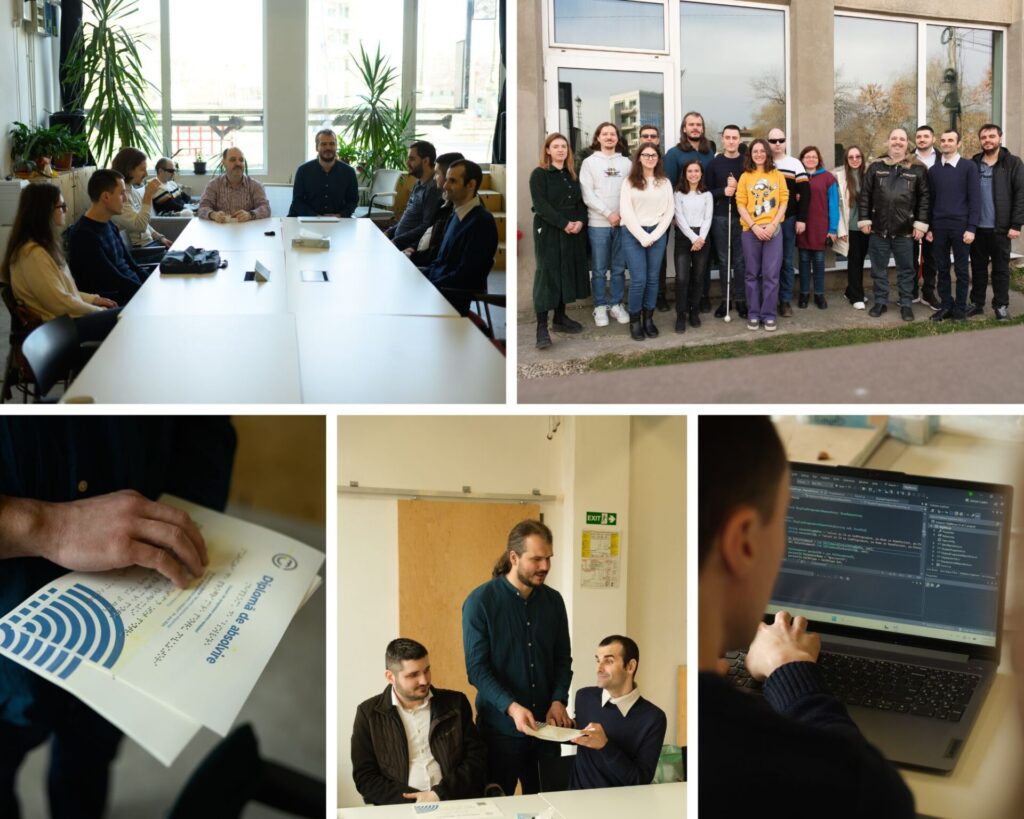
CMU Tech is the only course in Romania that supports people with and without visual or mobility disabilities in learning programming and discovering new educational or professional opportunities in the IT world.
The course is divided into two modules for one year: a beginner module and an advanced module. To participate in the advanced module, students need to complete an individual project. They learn the C Sharp (C#) programming language with applications in Windows programs, databases and web programming.
In 2025 we had:
- A graduation with 5 students who successfully completed their projects in January;
- A new generation: the 7th started with 13 students, after a rigorous selection from the 25 applicants.
You can read more about the project here: https://amais.ro/cmu-tech/
Empathy Workshops
„It is an experience worth living at least once. It helps you see the world from a different perspective, develops your empathy and shows you how important accessibility and an open attitude toward diversity are.”
- participant in the workshops at Societe Generale GSC
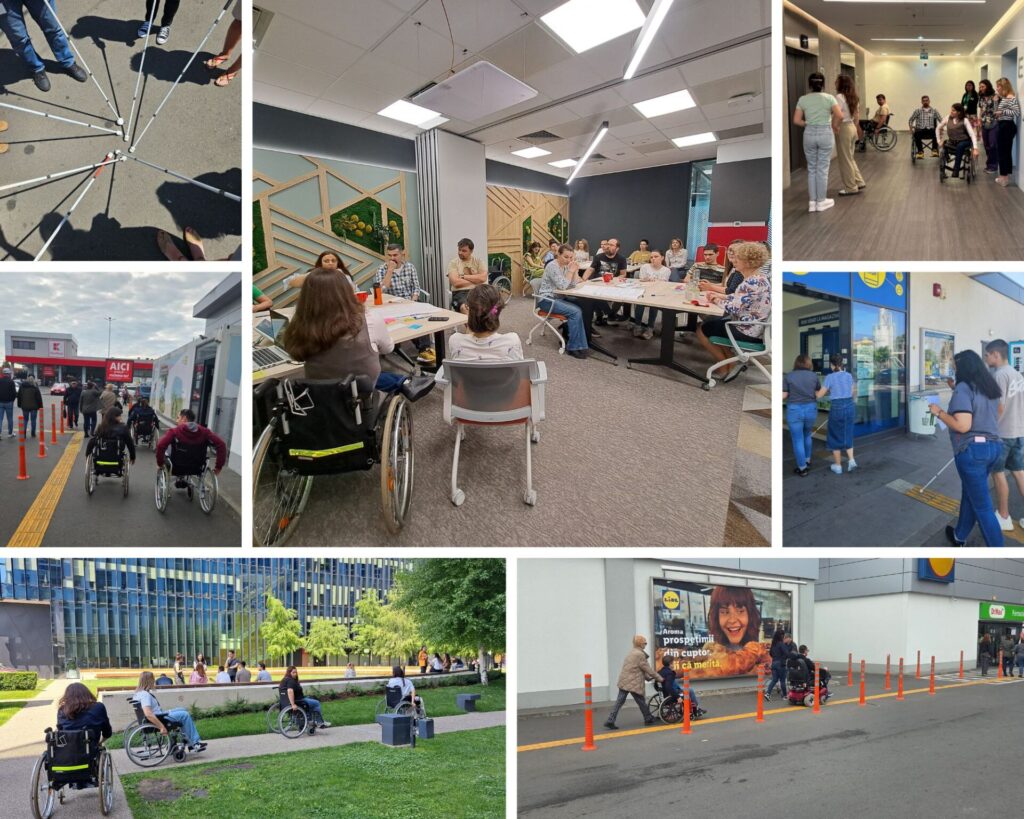
To initiate empathetic actions in the community and change perceptions about disability, we organize multiple empathy experiences each year for companies and public institutions.
In 2025, we held 14 empathy workshops with 197 participants: employees from Societe Generale GSC, Lidl Romania, and students from the “Ion Mincu” University of Architecture and Urbanism.
Empathy workshops aim to change biases related to disability, generate concrete empathetic actions, and increase the visibility of people with disabilities, providing them with an inclusive environment in which to tell their own story. In this context, alongside 15 guests with disabilities who shared their experiences, the obstacles they faced, and their vision of a more inclusive society, participants openly discussed prejudices and difficulties, identifying physical and social barriers and possible solutions.
If you want us to organize such a workshop for you and your team, contact us at contact@amais.ro.
Grassroots Design Workshop
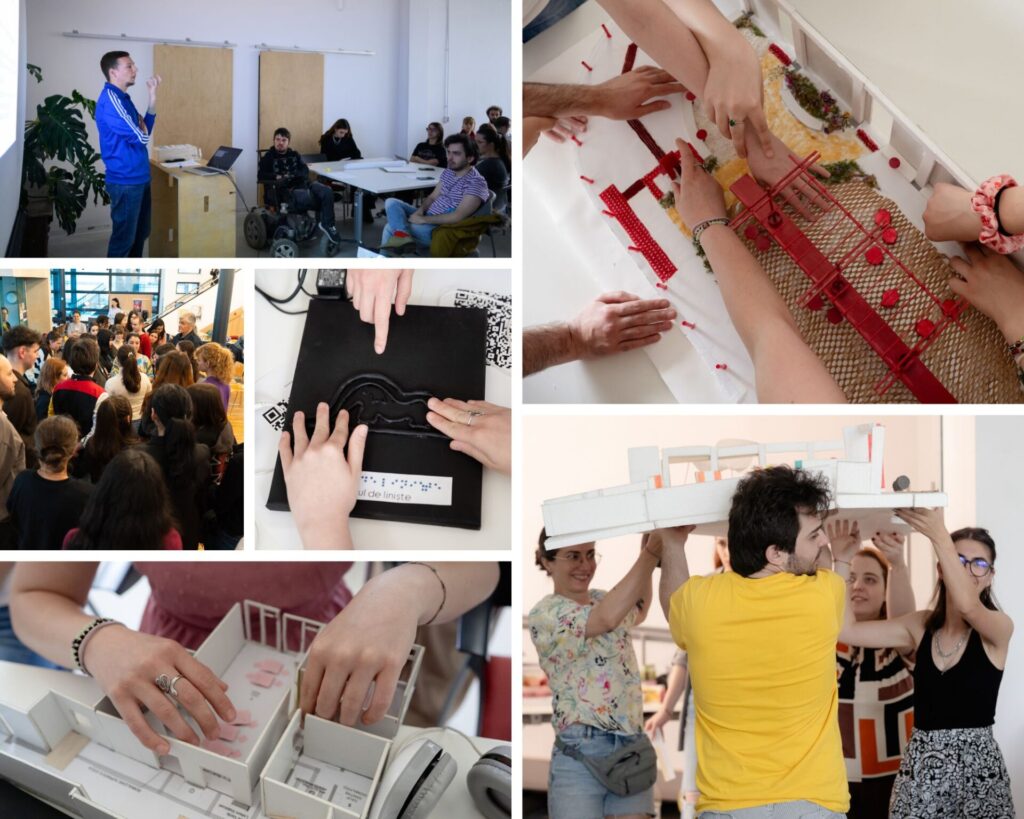
Space determines who can enjoy our city and who remains excluded. Architects play an essential role in improving the accessibility of the built environment. That is why, every year, we organize empathy workshops at the University of Architecture and have joined as partners in the project “Inclusive Public Space – a model of good practice for UAUIM”, a project organized by La Firul Ierbii Association in partnership with AMAIS and the “Ion Mincu” University of Architecture and Urbanism, funded by the Order of Architects of Romania through the Architecture Stamp.
25 students from various faculties (Ion Mincu University of Architecture and Urbanism, the Faculty of Horticulture, and the Faculty of Psychology and Educational Sciences) went through all the stages of design, from analysis to project presentation, receiving ongoing guidance from a team of 10 mentors from different professional fields, both with and without disabilities.
After the experience, more than half of the students began to see disability through the social model and to associate it with positive feelings. The projects they presented at the end surprised us and we will see what we can implement in the space from them to increase the level of accessibility.
More information about the project: https://www.
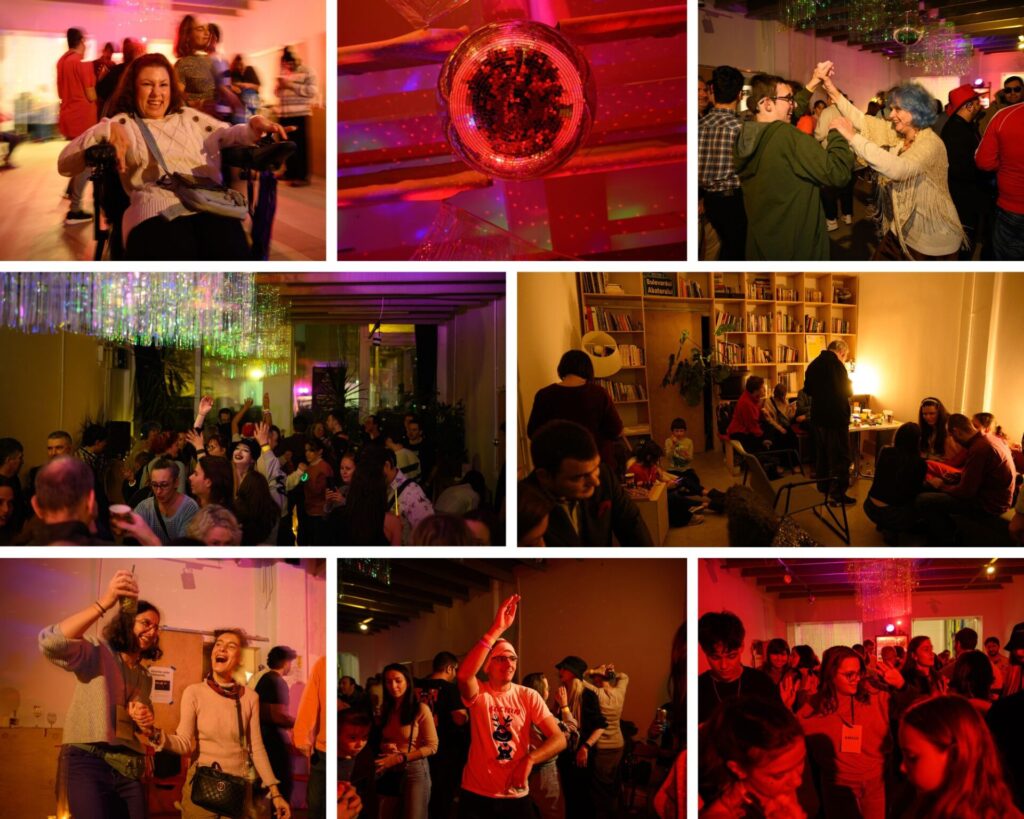
Inclusive Disco
"More than wonderful, it would be amazing if it could be organized more often. My son is in love with the Inclusive Disco, one of the few activities in which he fully engages."
- a mother of a teenager with disabilities told us at the disco
Bucharest offers very few restaurants, terraces or bars that are accessible to people with disabilities where they can go out with friends. The barriers are either physical — such as inaccessible spaces — or social — such as discriminatory attitudes toward people with disabilities. The absence of these accessible places for entertainment and socializing leads to social isolation. Due to this isolation, the accessibility needs of people with disabilities remain invisible, therefore creating a vicious cycle of exclusion.
In the absence of these social contexts, we organize fun inclusive activities, including the Inclusive Disco, an accessible socio-cultural event that has become a tradition, through which we celebrate a more independent, active life for everyone, regardless of abilities, age, gender, etc.
On April 12, we celebrated the spring edition 3.0 of the Inclusive Disco, honoring the International Day of Independent Living, co-organized with Superheroes Among Us. Inclusive Disco 3.0 took place at The Hub with the support of the British Council and Goethe-Institut, bringing together approximately 150 people with and without disabilities.
Inclusive Disco 4.0, the annual traditional edition in winter, organized every year around December 3, thus marking the International Day of Persons with Disabilities. This year, it brought together over 200 people with and without disabilities. Together, we celebrated with a party that meets the need for socializing and interacting with people who embrace diversity.
You can read more about the project here: https://amais.ro/2025/
More news, activities and events
International Project – British Council, Czech Centre & EUNIC
AMAIS has been involved in an international project with the British Council, Czech Centre and EUNIC. We have had the amazing opportunity to host architect Jos Boys and artist Štěpán Kus in residence: https://www.britishcouncil.ro/
B-inclusive! Festival
Ana Maria Costache was a speaker in the panel “Inclusive City and Urban Infrastructure”, where she spoke about the activity of AMAIS and the need for collaboration between public institutions and civil society, alongside lect. PhD. arch. Oana Mihăescu (UAUIM).
Local Government Forum 2025 – Modern and Accessible Cities, organized by the British Embassy and British Council
Alexandru Cucu was a speaker in the panel “Accessible by Design,” moderated by arch. Ștefan Bâlici (President of OAR).
International publication
Building Diversity (Denmark) has published the volume “…but, who are we building for?”, the continuation of the book “Who is the Architect?” (2023), dedicated to how the built environment responds to the needs of people, other species, ecosystems, and the climate. The volume includes the contribution of our colleague Iris Popescu, “The Empathy Revolution. Start by Challenging Your Own Biases”, a text that proposes exercises in reflection and empathy starting from the reader’s personal experience: https://arkitektensforlag.dk/
National media visibility
AMAIS projects have been featured in the national press:
SeeYou – Digi24: https://www.digi24.ro/
– I Like IT (Pro TV): https://stirileprotv.ro/stiri/
CMU School – Școala9: https://www.scoala9.ro/sa-ne-
International Recognition
The public space designed in Mahmudia has been nominated for the EU Prize for Contemporary Architecture, Mies van der Rohe Awards 2026: https://eumiesawards.com/
International Research
Iris Popescu participated, as a local expert, in a research project on arts and disability, coordinated by the British Council and developed by a mixed team of international experts – Jonathan Meth and Olga Macrinici and local experts, Ruxandra Mateescu. She also received a professional Fulbright – Hubert H. Humphrey fellowship. For one year she will work in Boston, USA, at the Massachusetts Institute of Technology (MIT) and the Institute for Human Centered Design, from where she will bring expertise and best practices in accessibility and inclusion to Romania: https://dusp.mit.edu/spurs-
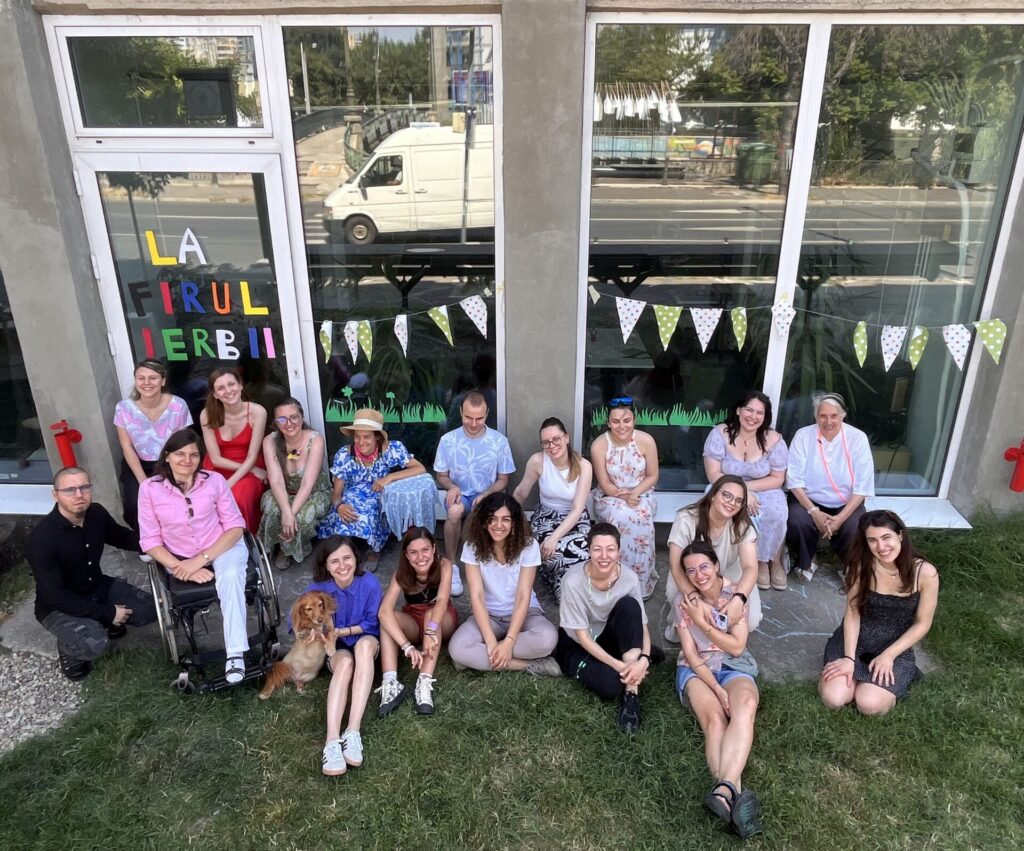
We already have plans for 2026 to expand the experiences that make accessibility needs more visible, break down prejudices about disability, and encourage people to act empathetically.
We need you to continue supporting us so that this change can grow and reach as many people as possible. Every message, every hour of volunteering, and every donation has mattered and continues to matter enormously. We are excited to take the next steps together with you and build a more accessible and inclusive future. You can support us by:
by completing Form 230 (3.5% of income tax)
by directing 20% of the profit or income tax of the company you work for;
through individual donations, one-time or recurring;
or through volunteering, alongside the AMAIS team and community.
All the details are here: https://amais.ro/doneaza/
Thank you for being part of our journey. Let’s build an even more empathetic and inclusive 2026 together.
Warmly,
The AMAIS Team